Parliamentary Speeches
Offsiders, ABC Television
29 Nov 200929 November 2009
Barrie Cassidy, Presenter:
And we are joined on the couch now this morning by the Federal Sports Minister Kate Ellis. Good morning, welcome.
Kate Ellis, Federal Sports Minister:
Good morning Barrie, great to be with you.
Barrie Cassidy:
How has your morning been so far?
Kate Ellis:
It's been a little busy, I got caught up in the local fun run, which was good to have the Minister get in the spirit of things but it was unexpected.
Gerard Whateley, ABC Sport:
And you got changed out of your tights as well?
Kate Ellis:
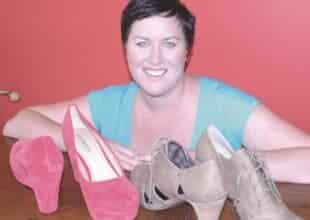
Well I was running in these shoes, I find it adds to the challenge.
Barrie Cassidy:
OK well the Crawford Report has come in for a lot of attention. It was certainly interpreted by Olympic officials as a vote against elite sports in favour of community based sports. Is there justification for that fear?
Kate Ellis:
I've been clear from the beginning that this process was about strengthening both and I don't know how many times I can say that we have no intention of walking away from elite support, and that this is not about divisive arguments about moving one to the other. It's about having a serious debate about how we strengthen our system for the future, and if you look at the 39 recommendations, I think that's what they're about too.
Barrie Cassidy:
But how can you do that, how can you strengthen both without more money? And in the current political climate is Kevin Rudd and others telling you that there will be more money?
Kate Ellis:
Well I made some statements this week about the fact that we as a Government intend to increase our support for both Olympic sport and community sport over time. And that is part of the joys of our Budget deliberations in terms of the sporting community. I think what they can take from that is that we recognise that these two don't operate in isolation from each other. If you want to have a strong, elite Olympic system, you've got to have the base coming through, you've got to have mass participation because it provides our future champions as well as all the additional health and community benefits.
Barrie Cassidy:
You'll be one of the few ministers getting extra funding.
Kate Ellis:
Well, we'll see how we go. I'm not pre-empting any of that, but I am saying over time that is where our commitment lies, we think both are incredibly important.
Gideon Haigh, Journalist:
It's plainly said in the report that there's a strong correlation between international sporting success and public funding for sport. Do you now accept that premise?
Kate Ellis:
I think that my view on the public funding of sport is that sport achieves a whole range of different goals, and part of that is about excellence and is about elite success, and of course public funding should be associated about that. But what this is about is also the fact that sport achieves educational goals, health goals, social community goals, multicultural goals, reaching Indigenous and closing the gap targets, all of these things, and funding needs to be associated with that too.
Gideon Haigh:
That statement though is very specific to the Olympics, and the follow on text is as well - that it's contingent, the amount of funding is contingent on the goal you set. If Australia is to retain its place in the top five then funding needs to increase significantly. If we're happy to be a top 10 nation then the current level holds. Do you accept that as truth?
Kate Ellis:
I accept that. The majority of the debate which we have seen in the papers has been about opinions like that, which are in the report. When we have a look at the recommendations around funding then the recommendation is if we want to increase funding for elite sport we should have associated targets which go with it. I wouldn't have thought that it was that controversial. I think that if you're looking at increasing funding you should look at why you are doing that. So the debate about where we want to finish - top five, top eight, top 10 - is a really interesting debate. And I know lots of people have opinions on it. My view is as a government we should be having the strongest system possible so that we get, I'd like to be top one if we could do it. We should be searching for the maximum return that we can have whilst having a well balanced system over all.
Caroline Wilson, The Age:
But Minister there are other Budgets, aren't there? I mean the Australian Olympic Movement has a lot of money in its fighting fund, I think they've got close to $100 million. I think that all the money Channel 7 in the last quadrennium put into the media rights of the Olympics, I think $2 million came back to Australia's Olympians. In America I think the equation is 12 per cent of all TV money, 20 per cent of corporate money, why are, is our Olympic movement not fighting harder to get the IOC money to spend on our athletes, and are you going to do anything about that?
Kate Ellis:
You'd have to talk to the Olympic movement themselves about who they are fighting and why. But I think that from our point of view, we think that the Olympics are incredibly important. And a lot of the coverage has been incredible divisive over this. It seems that when it comes to sport debates, you can't go out and ask, how do we do things better, how do we do things smarter, what are our priorities as a nation, without having people retreat to the camps and think it's a direct attack from one to the other.
Barrie Cassidy:
It's more emotional than a Liberal leadership spill, really.
Kate Ellis:
Well, I don't know about that but...
Wilson:
Were you insulted by that, by the way? I mean John Coates refers to Prime Minister Rudd in his speech and you as simply Ellis.
Kate Ellis:
Look....
CarolineWilson:
I don't think he's got the message that you say you've been putting across for the last two weeks.
Kate Ellis:
I'm not going to lose it too much sleep over that. I think John Coates is an incredibly important stakeholder, and I think when you have a look at who you want running our organisations you want someone who's passionate, who's going to get out there and lobby for more funding and who's going to push their case as hard as they possibly can. John Coates is a great sporting administrator because he does that, and that means that sometimes we might have differences of opinion, sometimes we'll agree on things, but ultimately we're going to work together because it's really important.
Gideon Haigh:
One of the most telling sentences I saw in the Crawford Report was that the panel was unable to ascertain the total level of funds spent by Australian Government departments or agencies on sport or sports related matters. Why was this, and doesn't it suggest a pretty disorganised, perhaps even cavalier attitude to Australian sports funding?
Kate Ellis:
I think that one of the most ambitious recommendations in the report is about the fact that both the Federal Government and state governments and local governments to some extent talk about the things we want to use sport for, all of the things beyond just whether it be the Olympics, or grand finals, we talk about health outcomes, we talk about community outcomes. Yet what they're saying is we don't have a funding system which recognises that, we make sport run around and knock on a whole range of different doors to access different pots of money. And the recommendation is that we should sit down and say, across government, what do which want sport to deliver for us, and what's important to us, and how do we as a Commonwealth as well as the state governments then have a policy in place which delivers all of those things? I think that's really exciting, but there's a range of these things which we haven't been focussing on yet.
Gideon Haigh:
In terms of delivery does the AOC need to present more evidence of participation dividends of Olympic sports? Because at the moment such evidence that they're presenting seems pretty impressionistic and anecdotal.
Kate Ellis:
I think that we will be focusing on ways that we can increase participation in sport and we've made that clear from day one of this government, that sport is a really important part of the preventative health agenda. So I'm really grateful that the report came up with a number of ways that we can do that, and some of them have got some pretty nice price tags associated with them too, which will lead to fun conversations. But we're committed to doing that anyway. I think that when we look at Olympic sport, we can look at the pursuit of excellence, we can look at what it does for Australia's reputation overseas, we can look at it as something which should be funded and will continue to be funded under this government as well.
Barrie Cassidy:
Now, is it confirmed that you're off to South Africa?
Kate Ellis:
Well, there's a bit of uncertainty about what's going on in the Parliament this week. So I'm certainly hoping we can pass our legislation and I can go to South Africa and help lobby for our World Cup bid.
Barrie Cassidy:
Yeah, now that's part of it, you're going to the draw of course for the... but while you're there you'll be cranking up the bid. I quoted before what Kevin Rudd had to say overnight about wanting to have a bigger global footprint diplomatically, and he sees sport as part of that.
Kate Ellis:
Absolutely. If you ask people overseas what they know about Australia, what they value about Australia, our sporting reputation is incredibly important. It comes back to the benefits which are delivered through us investing in sport, which go beyond just one day or beyond one event. So we recognise that sport is really important. That is why, one of the reasons why we're pursuing the World Cup so vigorously, but it's also the reason why we're investing in a whole range of programs internationally regarding sport.
Barrie Cassidy:
How do you think the bid is going? There's some disarray, I guess, in the England bid at the moment with some high profile committee people leaving.
Kate Ellis:
Yeah, I think that it's always going to be a big challenge, and we have never shied away from that, and particularly when you're working with every state and territory government as well as the Football Federation, and it's a big ask. But I think that we're remarkably coordinated and I think we've got a really good message to sell. We had some visiting journalists out in Australia this week who I had the chance to catch up with, and they were incredibly impressed about our commitment, but also the way that we are working together.
CarolineWilson:
Have you worked yet on the compensation package with the AFL and NRL who want some sort of answer in the next 10 days?
Kate Ellis:
I'm in constant conversations with them and I sat with both Andrew Demetrio and Mike Fitzpatrick and had a conversation about what this means for their codes. The reality is though, I think we all need to have a deep breath, because we don't know what it means for their codes yet. We don't know the stadia which will be finalised, so we don't know what impact it's going to have.
CarolineWilson:
But you've read the FIFA conditions so you're pretty clear on what you can't do if a World Cup is here.
Kate Ellis:
Well we're clear about that, but the other thing I would like to make really clear is I don't think that football, soccer, is the only sport in this nation that would benefit from us having a successful World Cup bid. And when you talk about legacy and when you talk about infrastructure investment, then the other codes have a substantial amount to gain as well. And this is all part of the conversations that we'll keep having.
Gideon Haigh:
Alright well that's a legitimate question. I know this virtually amounts to treason, but....
Kate Ellis:
I'm bracing myself.
Gideon Haigh:
If international football is so wealthy, so prosperous, such a thriving example of the free market in action, why should public money should be involved at all in the World Cup bid?
Kate Ellis:
Well obviously if Australia wants to put our foot forward, then the Australian bid is going to have to step up and be better and more impressive than the rest. It's not up to FIFA to decide who they would fund their bids and who they wouldn't. The Australian Government has said, we are committed to getting behind the Football Federation, we think this would be a great for Australian sport, more so we think it will be a great thing for the Australian community, and it will have a lasting legacy. So we made that commit, we've backed it up with $45 million and we're now doing everything we can to try and ensure we get a return for that and a World Cup host nation status in either 2018 or 2022.
Barrie Cassidy:
Now, Gerard, the arrangements during this week for the draw, one World Cup at a time, is that on Wednesday they'll decide the top eight who'll head up each of the divisions, and I think this is how it's likely to be though we can't be certain but you've got all those nations like Italy and Germany and Brazil, England and so on. We're putting the Netherlands in there ahead of France, and South Africa is there by virtue of being the host country. Now that's Wednesday. Then Saturday, and hopefully from your point of view Kate, you'll be there for this, but then the draw occurs. Now Australia, I notice just in the last week or so was shifted from 24 to 21. Where are we going to be? Will we be second tier or third tier?
Gerard Whateley:
Well that's borderline. The issue with the teams you just put up is we'll be in with one of those and all of us hope it's England, but you've got a one in eight chance of winning that.
Barrie Cassidy:
If we can manipulate it, please provide England.
Kate Ellis:
I'm pretty sure it doesn't work that way.
Gideon Haigh:
Whatever group we'll be in it will be called the group of death.
Gerard Whateley:
Oh without question. So this is an elaborate, and this will put the AFL draft to shame, it's an elaborate thing which Heidi Klum did last time she strolled out and lifted the balls from the pots - everybody cheered or groaned by virtue of what you get. It's the most random thing you can imagine as to where you'll end up, and it will utterly determine the fate of more than just Australia. If you're lucky enough to get just one top tier team, notionally, your path to the second round is a lot easier than if you land in the group of death.
Barrie Cassidy:
So if we're second tier and say for example a European club is first tier, we would then have a lower ranked South African club, South American club and an African club.
Gerard Whateley:
Yes, I guess your risk is if you're third tier you could land with Brazil, France as a second tier team and then Australia as your third, and there's your group of death.
Barrie Cassidy:
It's a crucial day.
(ENDS)